





Pueblo de pinturas al óleo de Dafen
¿Por qué se está amarilleando mi pintura al óleo? La guía definitiva para la restauración y limpieza de obras de arte antiguas

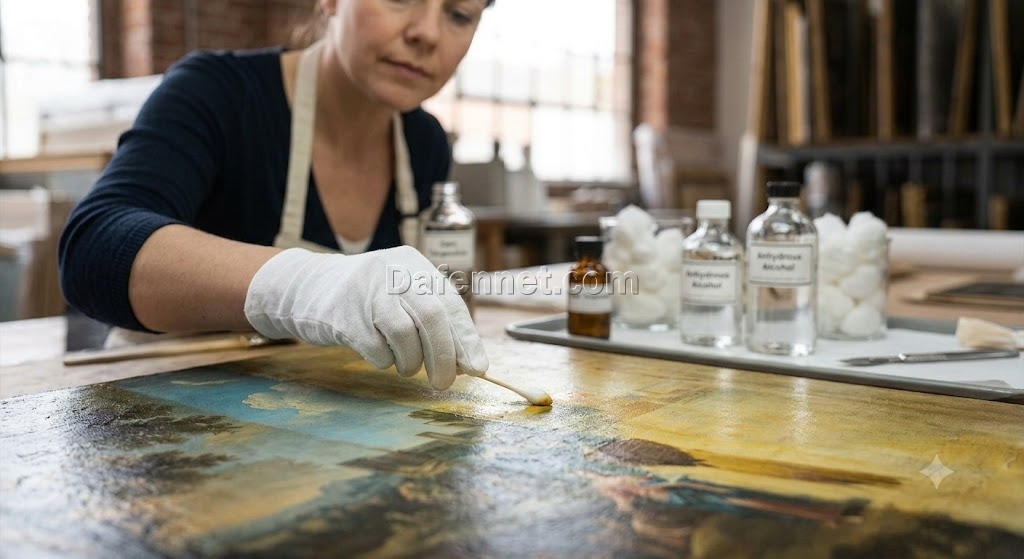
If you own oil paintings, especially older master reproductions or vintage gallery finds, you are fighting a silent, ongoing battle against two inevitable villains: accumulated surface dust on oil paintings y oxidized picture varnish turning yellow and dark.
Don’t panic. That beautiful canvas isn’t ruined. It’s just wearing a dirty coat. Today, we are opening up the studio doors to show you exactly how to clean an old oil painting safely, what professional conservators use, and when to back away from the canvas.
Phase 1: The Basic Dust-Up (For Light Surface Grime)
Before we bring out the chemistry set, let’s talk about everyday maintenance. If your artwork has just lost its luster due to sitting in a dusty room, you don’t need heavy solvents.
Pro Tip: Never, ever use a feather duster. They can snag on heavy impasto or loose paint flakes. Instead, use a soft-bristled artist brush for painting conservation to gently sweep away loose particles.
For stubborn surface dirt, a lightly damp, clean cotton cloth or cosmetic sponge works wonders.
- The Golden Rule for Canvas Care: Water is generally safe for stable, modern oil paint layers, but it is a massive threat to cracked oil painting film or traditional rabbit-skin glue grounds. If your canvas has fine cracks (craquelure), water can seep behind the paint and cause flaking. Wring that cloth out until it is barely damp!
- Got stubborn grime? A tiny drop of neutral, pH-balanced soap mixed into warm water can help lift grease. Just be sure to do a second pass with pure water to remove any soap residue.
Phase 2: The Chemistry of Art Conservation (Removing Yellowed Varnish)
When an oil painting turns dark and amber-toned over the decades, it’s almost always because the top protective layer—the varnish—has oxidized. Right now, science has yet to invent a 100% non-oxidizing varnish. To restore the painting’s original vibrant colors, the old yellowed varnish must be stripped and replaced.
Here is a look inside the studio’s solvent cabinet. How do professional art restorers choose a cleaning agent? It all depends on the age and composition of the piece:
| Solvent Type | Best Used For | Strength & Behavior |
| Pure Gum Spirits of Turpentine | Modern resin varnish removal | Gentle on old dried oil layers, but can soften fresh paint. Excellent for modern dammar or acrylic varnishes. |
| Refined Petroleum Benzene / Toluene | Tougher synthetic resins | Stronger dissolution power than turpentine; cuts through grime faster. |
| Anhydrous Alcohol (Ethanol / Methanol) | Aged, stubborn finishes | A powerful solvent for natural resins. Often mixed with turpentine by conservators to clean mid-century oil paintings that used oil-based varnishes. |
| Acetone & Chloroform | Ancient master art restoration | Ultra-strong. These will dissolve both resin y the underlying oil paint layer if left too long. Never used raw; only as a highly controlled additive for ancient artifacts. |
The Swab Test: How to Clean Varnish Off a Painting
If you watch a professional restorer work, they look less like painters and more like surgeons. Here is how the magic happens:
- The Corner Test: We roll a sterile, white medical cotton swab into the chosen solvent mixture. We always start in a discreet corner or a dark area of the painting.
- The Circular Motion: Using gentle, circular motions, we lift the yellowed crust. The trick is never to linger on one spot for too long.
- Watch the Swab: The moment the cotton ball turns amber-yellow from the dissolved resin, it gets tossed. If you see the actual color pigment of the painting transferring to the cotton, stop immediately—you are dissolving the artwork itself!
- The Scraping Technique: For microscopic, stubborn spots like old fly specks or hardened debris, a steady hand and a surgical scalpel are used to gently flake the blemish away without disturbing the canvas weave.
Ready to Restore Your Collection?
Cleaning a masterpiece is a balancing act between chemistry and artistry. If you are dealing with a modern piece using contemporary resin varnish coatings, a gentle wipe-down with turpentine will often restore that beautiful, crisp contrast. But if you have a precious family heirloom or an antique canvas, it’s always best to consult a professional studio.
Have a painting that’s looking a little tired? Drop a comment below or send us a photo of your canvas—we’d love to help you figure out the best way to bring those colors back to life!
