




De Kooning (1904–1997) left Rotterdam for New York in 1926 and came into painting through the trades — a decorating firm’s apprenticeship, years as a house painter. That background never left the surface: paint as a material to be pushed, dragged, wiped off and put back.
Three bodies of work carry most of the demand, and each asks for a different eye:
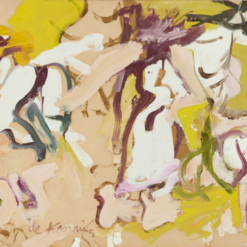
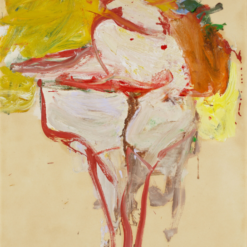
– The Woman paintings, begun around 1950 and fought over for years on the same canvas — figure and abstraction locked together, mouths and knees painted with the same relish as the background. Look for edges that refuse to close.
– The black-and-white paintings, 1948–1950, thinned enamel-black on white, drawing and painting collapsed into one act. Their power is spacing, not detail.
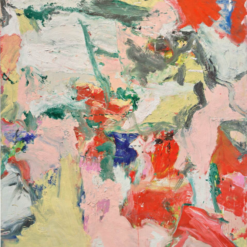
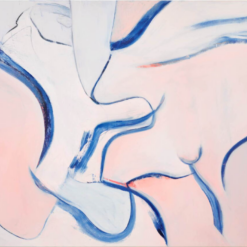
– The late abstractions, made after the move to East Hampton in 1963 — the landscape broken into wide sliding bands of blue, green, orange. Light doing the work instead of the figure.
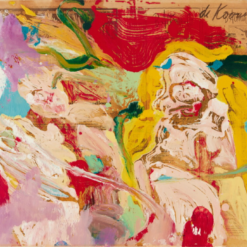
What separates a convincing reproduction from a dead one: air between the strokes, a warm muddy middle rather than clean colour, and lines that keep vibrating after the arm has left the canvas.

Zusammenfassung
Zusammenfassung
Water…Soft Banks and a Window (Untitled VIII) | Willem de Kooning Hand-Painted Oil Reproduction
Zusammenfassung
Zusammenfassung