


Dafen Ölgemälde Dorf
Jenseits der Kopie: Die wahre Geschichte der “chinesischen Van Goghs” im Dorf Dafen
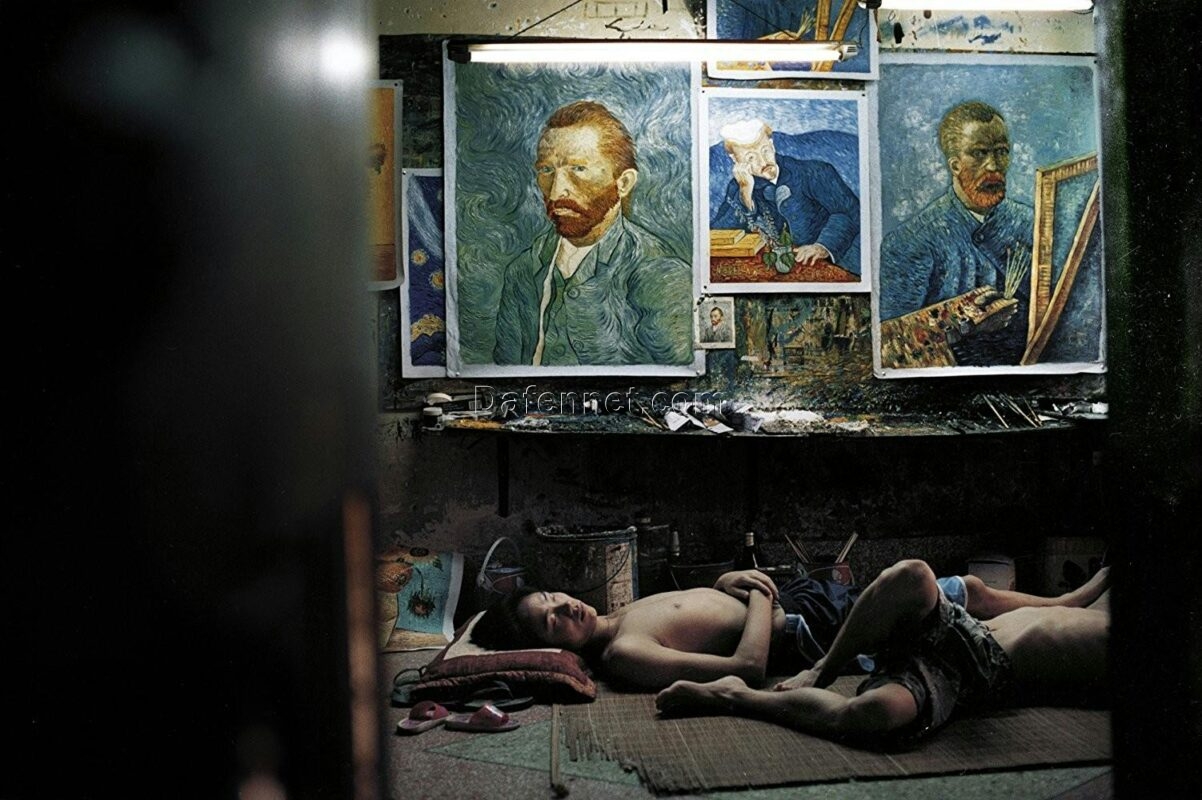
Imagine walking down a narrow, humid alley in Shenzhen, China, where thousands of “Starry Nights” hang like laundry drying in the sun. The smell of turpentine is thick, the hum of electric fans is constant, and somewhere in a cramped studio, a man with calloused hands is picking up a brush to transform a blank canvas into a swirling, textured nebula of cobalt blue and deep ultramarine.
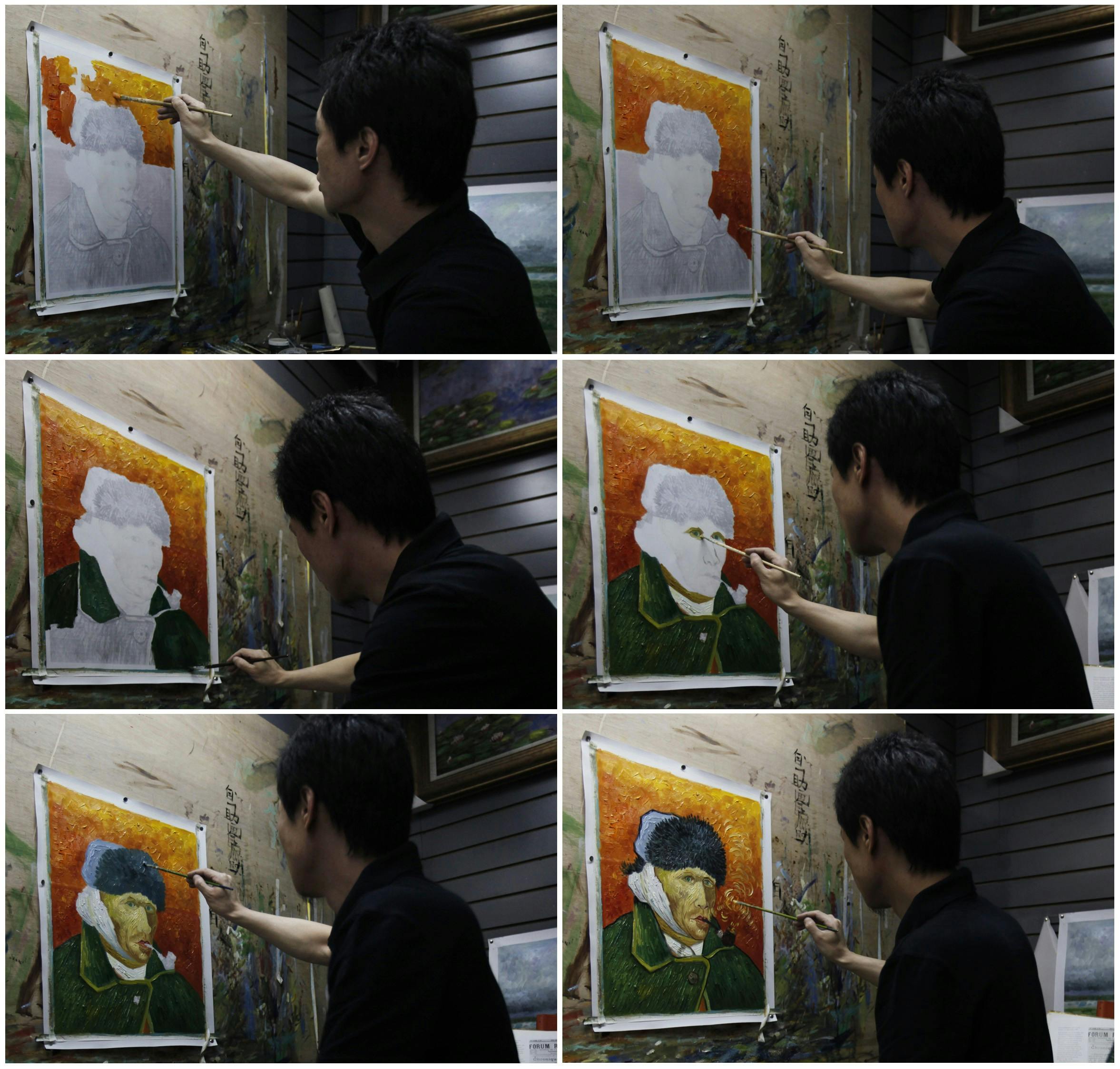
This is Dafen Ölmalerei Dorf, the world’s most famous “oil painting factory.” For years, it has been the epicenter of mass-produced art, churning out replicas that eventually grace the walls of homes and offices across the globe.
But behind the canvases, there’s a human story that is far more complex than the labels suggest.

The “Chinese Van Gogh” Phenomenon
If you’ve seen the acclaimed documentary China’s Van Goghs, you know the faces: Zhou Yongjiu und Zhao Xiaoyong. These men are the heartbeat of Dafen’s history.
In the 90s, these artists weren’t painting for the sake of expression—they were painting for survival. I recently dove deep into their journey, and it’s a powerful reminder that “art” and “labor” are often inextricably linked in ways the high-end gallery world refuses to acknowledge.
The Assembly Line of “World Masterpieces”
Let’s talk numbers. In 1994, after a single trip to the Canton Fair, Zhou Yongjiu landed a massive order: 10,000 Van Gogh replicas in three months.
To hit that deadline, they didn’t just paint; they orchestrated. It was a 21-person assembly line:
- One person handled the sky.
- Another mastered the vase of flowers.
- Someone else specialized in the final detailing.
They produced 8,000 paintings in just six weeks. When you look at their work from that era, don’t just see a “copy.” See the grit of 37 people working in a 700-square-meter room, painting until 4:00 AM, sleeping for a few hours, and starting all over again. They weren’t “faking” art; they were surviving an economy that demanded speed over soul.
Why We Need to Stop Calling Them Just “Copyists”
There is a prevailing snobbery in the art world that dismisses Dafen’s output as “low-brow.” But as an art lover, I find that view narrow-minded.
Zhao Xiaoyong’s reaction when he finally visited the Van Gogh Museum in Amsterdam—where he stood in silence, face-to-face with the original works he had spent decades replicating—is a defining moment in modern art history. He wasn’t just a laborer; he was a student of the highest caliber.
These artists have undergone a massive transformation. The era of the “painting factory” is fading, and a new wave is rising.
The Shift: From Copying to Creating
Today, Zhou and Zhao are in a different chapter. They are shedding the “Chinese Van Gogh” title—a label that once defined their livelihood but now feels like a cage.
- Zhou Yongjiu has pivoted to painting his memories: the old houses in his hometown of Chaozhou, scenes that actually mean something to him.
- Zhao Xiaoyong is painting the streets of Hong Kong and his own life experiences.
They are reclaiming their brushes. They are proving that while you can replicate technique, you cannot replicate the soul of an original creation.
The Takeaway for Art Lovers
If you’re ever in Shenzhen, a trip to Dafen Oil Painting Village is non-negotiable. But don’t go there expecting to find just cheap reproductions for your living room. Go there to see the evolution of contemporary Chinese oil painters.
These artists are moving from reproducing the history of art to writing their own. They aren’t Van Gogh. They are Zhou and Zhao, and their own stories are finally starting to emerge from the shadow of the masters.
Are you a fan of contemporary realism, or do you prefer the grit of the original creators? Let me know in the comments below!
