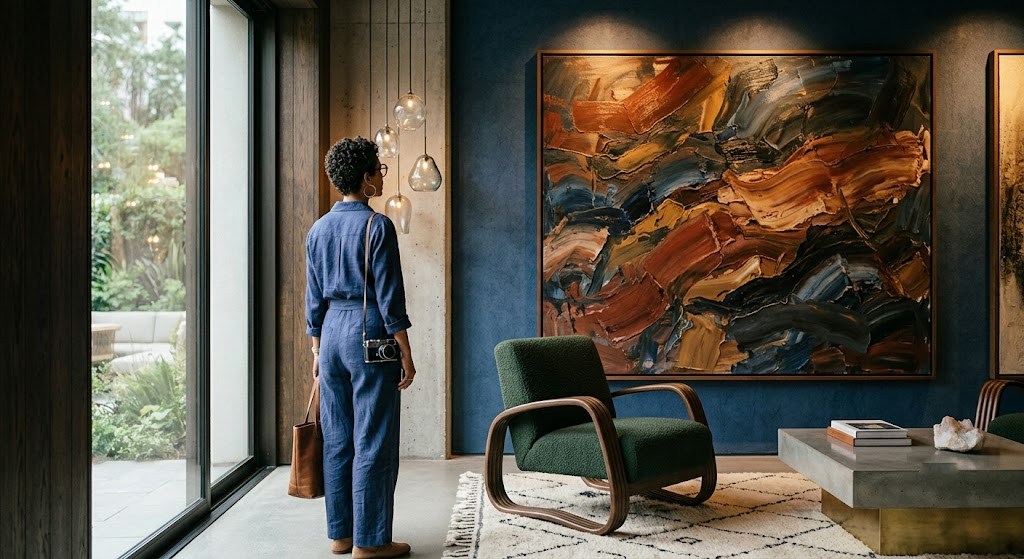
Today, we need to talk about hospitality design, but not from the boring, corporate perspective you usually get in a dry PDF. We are talking about why you actually feel something the second you walk into a world-class boutique hotel lobby. It’s not just “good decor.” It’s a hyper-intentional blend of spatial psychology and high-end art curation.
When we look at spaces that truly hit, they all follow a set of unspoken rules—rules that turn a basic room with a bed into an absolute cultural destination. Let’s break down the 7 core pillars of luxury hospitality art design, and why the best spaces treat interior styling like a fine art medium.
1. Holistic Spaces over Cluttered Rooms (The Power of Unity)
We’ve all seen spaces where an interior designer clearly went rogue. They found a cool sculpture, threw it in a corner, and called it a day. But true luxury hotel art curation isn’t about individual ego; it’s about the collective harmony. The absolute golden rule here is interior environment cohesion. The art shouldn’t just sit in the room—it needs to converse with the architecture, the lighting, and the textures of the furniture. It’s about merging pure artistic expression with functional, everyday comfort.
2. Nailing the Golden Ratio (The Aesthetic Form)
Why do some hotel lobbies just look right on your camera roll? It’s pure geometry, my friends. We are talking about the fundamentals of visual weight: rhythm, scale, proportion, and balance. Incorporating hospitality art and framing services that understand scale can make or break a space. If a painting is too small for a high-ceilinged lobby, the energy leaks out. Masterful art consultancy for luxury hospitality focuses heavily on this formal beauty—ensuring the visual weight of a canvas anchors the entire room.
3. Designing for the Current Zeitgeist (The Era Shift)
Good design acts as a mirror to where we are right now. It’s about contemporary hospitality art installation that respects tradition but pushes the boundaries with modern techniques. Think about pairing a classic, heavy impasto oil painting with sleek, minimalist lighting. It’s that exact friction between heritage craftsmanship and cutting-edge design languages that gives a modern boutique hotel its edge.
4. Telling a Story via Local Context (Cultural Vibe Checks)
Nobody travels across the world to stay in a hotel room that looks like it could be anywhere. We want texture. We want roots. This is where bespoke art commissions for hotels come into play. A truly elevated space dives deep into the regional subculture, utilizing authentic cultural narrative interior styling to connect with travelers. It’s about tapping into the local creative community and translating that specific geographic soul onto the walls.
Low-Tier Design: Mass-produced, generic prints that say nothing.
High-Tier Design: Hand-painted, site-specific art that tells a story.
5. Innovation within the Boundaries (Creative Constraints)
In fashion and in interior styling, absolute freedom can actually kill creativity. The real magic happens when you innovate within a specific brief. The absolute sweet spot for innovative commercial interior art is where the property owner’s commercial vision, the architect’s spatial boundaries, and the artist’s raw creative drive seamlessly intersect. It’s relative freedom, and it breeds the most unforgettable masterpieces.
6. Sustainable Luxury is the Only Way Forward (The Eco-Standard)
We can no longer afford to ignore how spaces interact with the planet. The modern traveler is hyper-aware of sustainability. Implementing eco-friendly hospitality art design means looking at the lifecycle of materials. Whether it’s sourcing sustainable fine art materials for corporate spaces—like heavy-duty pure linen canvases over synthetic alternatives—or working with local artisan collectives, the goal is to weave the interior environment into the earth’s natural ecosystem.
7. The Ultimate Truth: People-First Curation
At the end of the day, strip away the theories, the jargon, and the aesthetics. Who is the room actually for? Human-centric hospitality art placement is the ultimate heartbeat of this entire discipline. A space needs to cater to the human psyche, providing comfort, sparking curiosity, and evoking genuine emotion. If an art piece doesn’t make a guest stop, breathe, and feel something, it’s just expensive wallpaper.
The Takeaway: The next time you find yourself lounging in an incredible hotel lobby, look closer at the walls. Notice the brushstrokes. Feel the texture. It’s not accidental—it’s a carefully orchestrated masterpiece designed just for you.
What’s your take on hotel art? Do you prefer sleek modernism or heavy, textured oil paintings with local history? Let me know in the comments below. Stay creative, and I’ll catch you in the next one.