


Dafen Ölgemälde Dorf
Wie Chinas “Ölmalerei-Dorf” jede globale Krise überlebte - und eine $80M-Industrie aufbaute

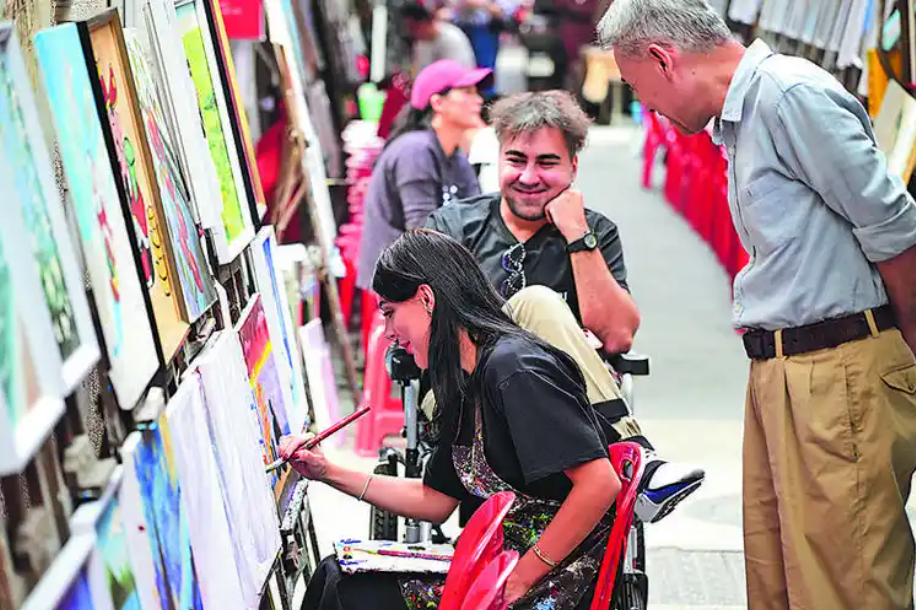
Every tremor in the global economy echoes loudly in a tiny urban village in Longgang, Shenzhen.
Back in 2016, the ongoing Eurozone crisis sent shockwaves through Dafen Village — world-famous as China’s No.1 oil painting village. Some businesses collapsed. Others got stronger. For Luan Liyin of Yinbo Art, it was just another turn on the road of reinvention. He joined forces with several specialized companies to form the “Dafen Alliance,” mixing painting, framing, sculpture, and ceramics. By expanding into more art forms, they cut logistics and customs costs, built a closed industrial loop, and gained a real competitive edge.
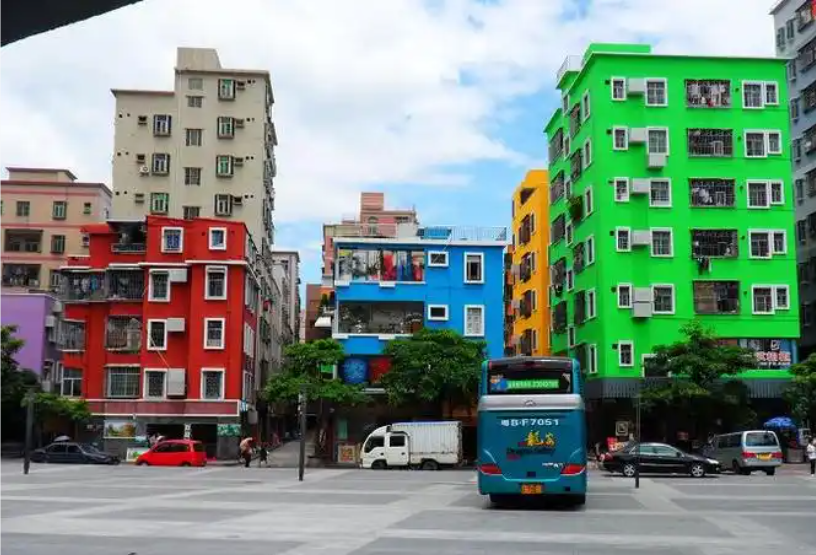
When Luan Liyin left university teaching and moved to Dafen in 1997, he had no idea this neighborhood would become a global economic storm center.
Dafen is a former urban village in western Shenzhen. In 1989, Hong Kong art dealer Huang Jiang set up shop here. Painters flocked in. They copied masterpieces like the Mona Lisa, and soon “Dafen Lisa” took the world by storm. Dafen eventually captured 70% of the global oil painting market — an unbelievable figure for a single Chinese village.
Market pressure forced Luan Liyin to reinvent his business again and again.
His first pivot came after the Asian financial crisis. He abandoned high-end copying and began creating abstract works inspired by American painter Mark Rothko: simple rectangular blocks of color. These pieces sold for over 1,000 yuan, with an 80% profit margin. Clients from all over the world lined up to buy.
The second transformation hit in 2009, during the worst of the global financial crisis. Luan imported more than 20 digital printers and pioneered a “print + paint” model. Print first, then hand-touch. It boosted efficiency and cut costs by at least two-thirds compared to fully hand-painted art. Priced at half the cost, these hybrid pieces fit the weak economy perfectly — and his actual profits jumped higher than before.
With American and European markets still sluggish, Luan shifted a third time in 2012. He turned his Chinese zodiac paintings into cultural and creative products, stepping into art derivatives. In 2014, he licensed panda designs from artist Chen Wanyi and made countless panda figurines. Today, he partners with over 40 artists, turning art from canvas into decorations and daily-use goods.
Over 19 years of constant change, Dafen’s streets transformed too. Every shift in mainstream products reshaped the village — a visible sign of its endless upgrading, says Liu Yajing, director of the Dafen Oil Painting Village Management Office.
Every wave of crisis left some painters and firms struggling. But others survived and thrived. Even as Western orders shrank, most losses came from low-quality copies. Dafen’s annual output has stayed steady at around 4.2 billion yuan. Orders that were once scattered now flow to innovative, forward-thinking art companies.
“Survival of the fittest,” Liu says. “Painters who focus on original work and adapt quickly have grown stronger through market reshuffling. This is market logic — and the inner drive of China’s upgrading economy.”
Through reinvention, Yinbo Art reduced its painters from 380 to under 100 — while annual sales grew from millions to over 80 million yuan.
Original art now makes up 20–30% of Dafen’s output. Art centers, coffee galleries, and creative spaces line the streets. In July 2016, 35 original Dafen oil paintings were shown at the 3rd Cannes Chinese Culture Festival.
In the next 3–5 years, Dafen will add an oil painting museum, theaters, training centers, and hotels. This old urban village is becoming an international hub for oil painting production, trade, exhibitions, education, and art tourism.
“Every crisis is a chance to transform,” Luan says, sitting in his newly built art gallery, wearing a green army cap. Years of copying the Mona Lisa taught him more than just brushstrokes. He learned how to smile through storms — and turn every global challenge into a Chinese-style comeback.
