





Dafen Ölgemälde Dorf
Wie die Malereiindustrie in Dafen entstand: Ein Händler, ein Umzug, eine Saat
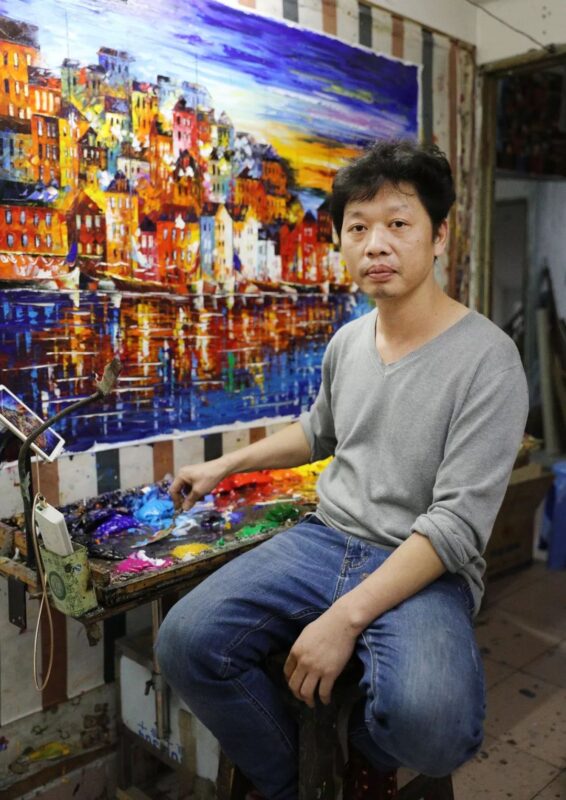
The story of Dafen Village’s oil painting industry begins with a single person—and a turning point in China’s reform era.
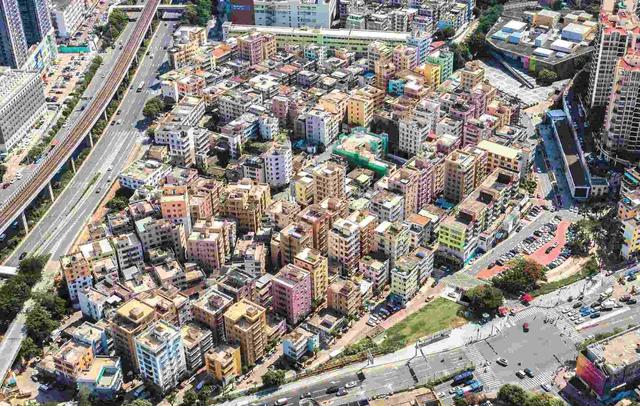
In 1979, Shenzhen became one of China’s first Special Economic Zones. But at that time, Dafen Village—then part of the Buji commune—sat outside the SEZ boundary. The village remained poor, with average annual income reportedly under 200 yuan. Yet history often works through geography: being “outside the window” of the SEZ unexpectedly opened a larger door. Buji’s position beyond the border made it a natural site for processing export goods connected to Shenzhen and Hong Kong.
While oil painting was still unfamiliar to most people in China, demand for hand-painted decorative oil paintings was already strong in Europe and North America. From the late 1970s into the early 1980s, production shifted toward lower-cost regions—first to Hong Kong, and then, after China’s opening-up, into the Pearl River Delta, where labor was even more affordable. This created a rare opportunity for the Shenzhen–Buji area.
One key figure was a Hong Kong art dealer named Huang Jiang, who had been in the oil painting business since the 1980s and served major international buyers, including large retail chains. To meet growing demand, Huang moved into mainland China early. He first set up in Huangbeiling, Luohu District, a location close to Hong Kong and well-positioned for receiving orders and market information.
There, he established a large workshop—about 600 square meters—bringing together multiple painters to fulfill overseas orders by reproducing famous artworks. A few years later, rising rents and practical pressures forced him to relocate. In 1989, almost by chance, he visited Dafen Dorf, about three kilometers from Buji town. At the time, Dafen was quiet and rural: farmland, livestock, scattered homes, and a population of fewer than 300.
To Huang, Dafen offered the perfect mix: low rent, a calm environment suitable for painting, proximity to Shenzhen and Hong Kong, and low labor costs. With new orders in hand, he moved in with more than a dozen painters, rented a village house, and opened what became Dafen’s first oil painting factory. This was the moment when “commercial painting”—mass-produced hand-painted artworks made primarily for export—took root in Dafen.
Huang understood both management and market connections. Orders grew rapidly, competition was limited, and monthly output expanded from tens of thousands of paintings to far more. People who wanted to make a living through painting began arriving in Dafen. Huang also outsourced large volumes of work to smaller dealers and independent painters, helping an entire ecosystem form around the industry.
As the market expanded in the early 1990s, Dafen developed an efficient “production-line” model: a painting could be broken into steps, with each painter specializing—backgrounds, coloring, edges, finishing—passing the canvas from one station to the next. Many early workers were not formally trained artists. With quick training and repetition, they became skilled specialists on this workflow, capable of producing consistent results at remarkable speed.
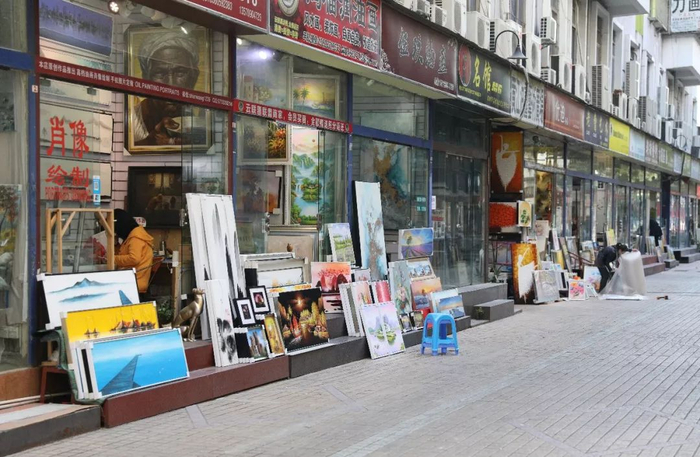
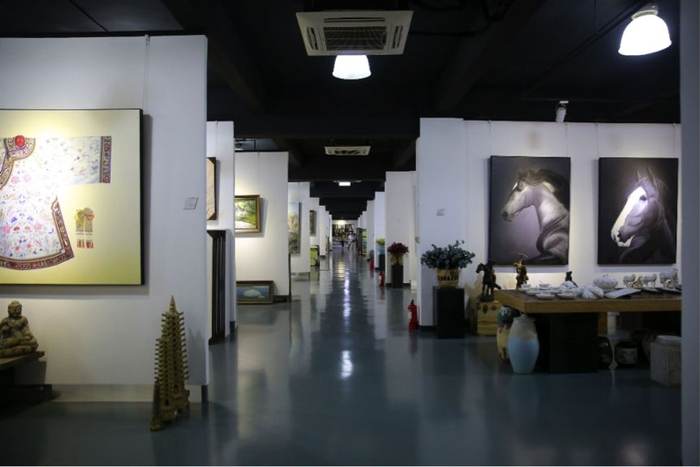
By the mid-1990s, Dafen had attracted over 500 painters, and supporting businesses—canvas, frames, brushes, pigments—began moving in as well. What started as a forced relocation became something far larger: a single practical decision planted the first seed of Dafen’s oil painting industry—one that would later grow into a globally recognized painting village.
