





Einführung in den Maler in unserem Atelier.
Zhao Xiaoyong: Der “chinesische Van Gogh” des Ölmalerdorfs Dafen in Shenzhen
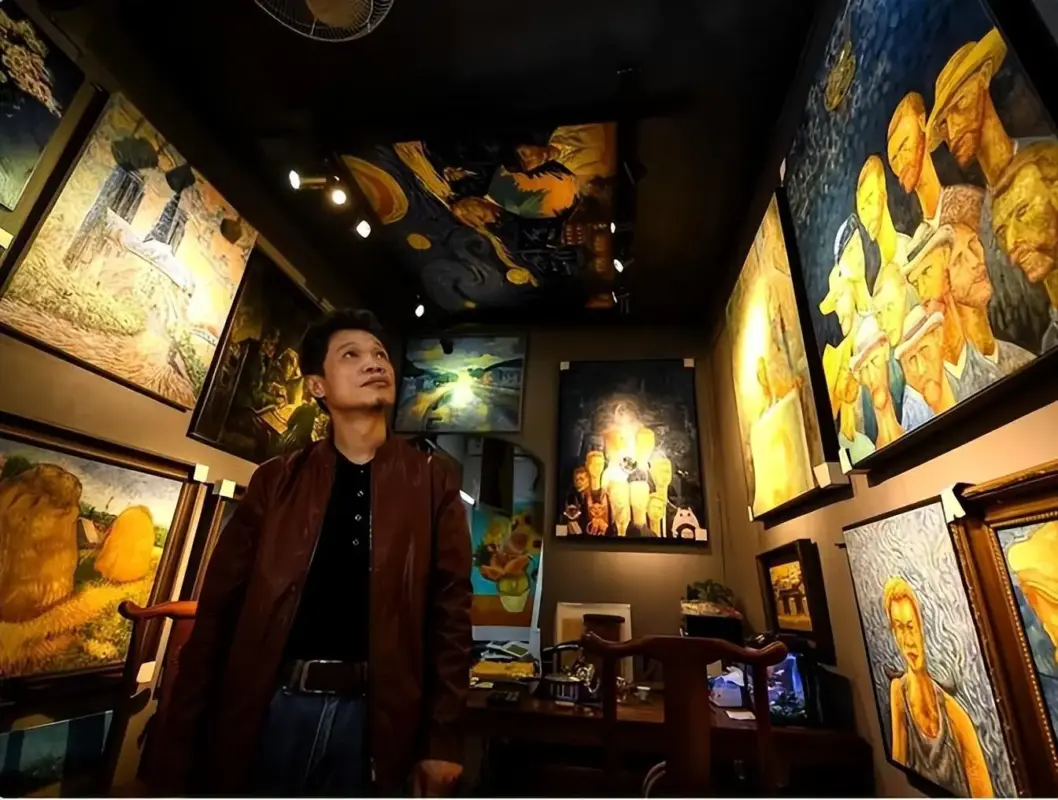
At the entrance of Zhao Xiaoyong’s studio, a short bio sits on display. At the very top, it reads: “The Light of Dafen Village.”
That title captures both a personal journey and the rise—and reinvention—of one of China’s most famous art communities: Dafen Ölmalerei Dorf in Shenzhen.
What is Dafen Oil Painting Village?
Dafen Ölmalerei Dorf is located in Buji, Longgang District, Shenzhen. Starting in the 1980s, it gradually evolved into a specialized “industrial village” built around oil painting production and sales—especially decorative paintings and reproductions for export markets.
At its peak, Dafen became widely known as “China’s No.1 Oil Painting Village.” Industry reports and media accounts often describe Dafen as a major global supplier of made-in-China oil paintings for Europe and North America, powered by thousands of painters working at remarkable scale.
Who is Zhao Xiaoyong?
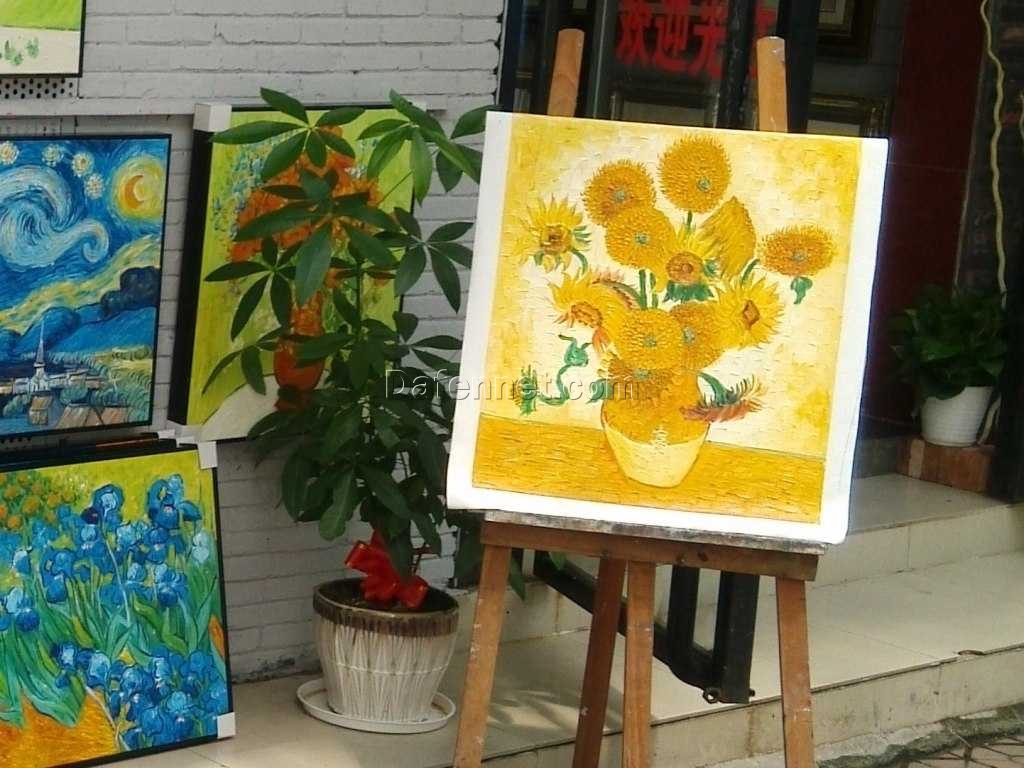
Among the many painters who worked in Dafen, Zhao Xiaoyong became one of the most distinctive figures. Since 1997, his studio has focused heavily on reproducing Vincent van Gogh’s works—especially the iconic “Sunflowers.”
Over nearly three decades, Zhao has painted more than 100,000 Van Gogh replicas, earning him the nickname “China’s Van Gogh” (also known online as the “Chinese Van Gogh”). His name has become a symbol of Dafen’s cultural identity—where art meets craftsmanship, and creativity meets industrial reality.
From Factory Worker to Full-Time Painter
Zhao’s turning point came in 1997, when he was 25. He worked as a skilled technician in a Taiwan-funded handicrafts factory in Shenzhen, earning about 1,100 RMB per month—a decent wage at the time. But he resigned, moved into Dafen with limited savings, and took a leap into uncertainty.
Like many young people from rural China during the Reform and Opening era, Zhao came to Guangdong seeking income to support his family. Before entering Dafen, he had already spent nearly a decade doing factory work—from electronics to garments. Yet drawing had been part of his life since childhood, influenced by his father’s talent for lettering and illustrations.
The First Van Gogh Order: “Sunflowers”
When Zhao first arrived, he had never painted with oils. He learned by self-study, watching other painters and practicing techniques.
Then came his first big opportunity: a batch order of 20 copies of Van Gogh’s “Sunflowers.”
At the time, Hong Kong art dealers were a key link in Dafen’s export model. Orders came from overseas markets, production happened in Shenzhen, and shipping moved through Hong Kong—a system often compared to the region’s manufacturing “processing trade” model.
Interestingly, the “Sunflowers” order was initially rejected by a more experienced painter who felt the work was too costly—oil paint was expensive, and the margins were uncertain. The order landed with Zhao, who took it on out of necessity and ambition.
Scaling Up: The Production-Line Studio
As orders grew—from dozens to hundreds, and sometimes thousands—Zhao built a workshop system that resembled a factory production line:
- standard color palettes
- division of labor (background, main subject, details)
- dedicated quality checks
- training apprentices through intensive repetition
This method wasn’t about personal expression. It was about survival, consistency, speed—and the demand of a global market that wanted recognizable masterpieces at accessible prices.
The 2008 Crisis and the Industry Shift
For Dafen, 2008 became a major turning point. The global financial crisis hit export demand hard. Many workshops faced shrinking orders, rising rent, higher labor costs, and increasing material expenses.
Zhao also observed a broader shift: some overseas buyers began moving production toward lower-cost regions in Southeast Asia, where similar “Dafen-style” models started appearing.
Over time, the pressure pushed Dafen toward a new direction: higher-end customization.
“I Must Paint It More Like the Original”
A powerful personal shift began earlier for Zhao. After watching a film about Van Gogh in the late 1990s, he realized the paintings he reproduced daily carried deeper human stories.
In 2016, Zhao visited the Van Gogh Museum in Amsterdam and saw the originals in person for the first time. The experience shocked him: he noticed mistakes in proportion, brushwork, and color that he hadn’t fully understood before.
His mindset changed: not just to replicate, but to improve—to make the reproduction closer to the original, with stronger technique and higher standards.
From Mass Orders to High-End Custom Oil Paintings
Today, Zhao’s studio is no longer crowded with a large team producing bulk exports. He describes a quieter reality: fewer people, fewer orders, but higher pricing and higher expectations.
Instead of producing three paintings per day, the studio may spend several days on a single piece—focusing on:
- improved accuracy and detail
- richer color control
- better materials
- more refined finishing
This mirrors Dafen’s wider transformation: from export-driven volume to domestic demand + customization + exhibitions + cultural branding.
Original Art vs. Reproduction: A Practical View
Zhao doesn’t treat reproduction and original art as enemies. For him:
- reproduction was about survival, income, and learning
- original creation comes from passion and growth
He notes that many artists—trained or self-taught—move from copying to original work over time. In his view, mastering imitation can also be an achievement.
The Next Generation and Dafen’s Future
Zhao’s children are not formally trained artists, but they paint in the studio. Their works may also appear in local galleries or sales spaces. His hope is that they can paint by choice, not purely for survival.
Meanwhile, Dafen faces generational changes: older painters leave the industry, younger painters arrive (including art academy graduates), but market uncertainty remains. Still, Zhao believes China’s art market is expanding, and hand-painted texture has a value that printed copies cannot replace.
Why This Story Matters
Zhao Xiaoyong’s journey is more than a personal biography. It reflects the evolution of an entire cultural industry:
- from factory-like art production to premium craftsmanship
- from overseas export reliance to a stronger domestic market
- from “copying” as labor to technique as a path toward artistry
In a narrow alley of Dafen, surrounded by stacks of Van Gogh reproductions, Zhao represents countless painters who shaped this village. He calls himself “ordinary and lucky”—but his story has become one of Dafen’s most visible symbols.
